Website Trends 2026: Why Your Website Isn’t Just a Website Anymore
The way customers find, explore and interact with businesses online is changing. Here’s what the latest website trends mean for your business in 2026.
A few years ago, having a website was often enough to establish your business online. You needed a homepage, a few service descriptions and some contact details.
Today, things look a little different.
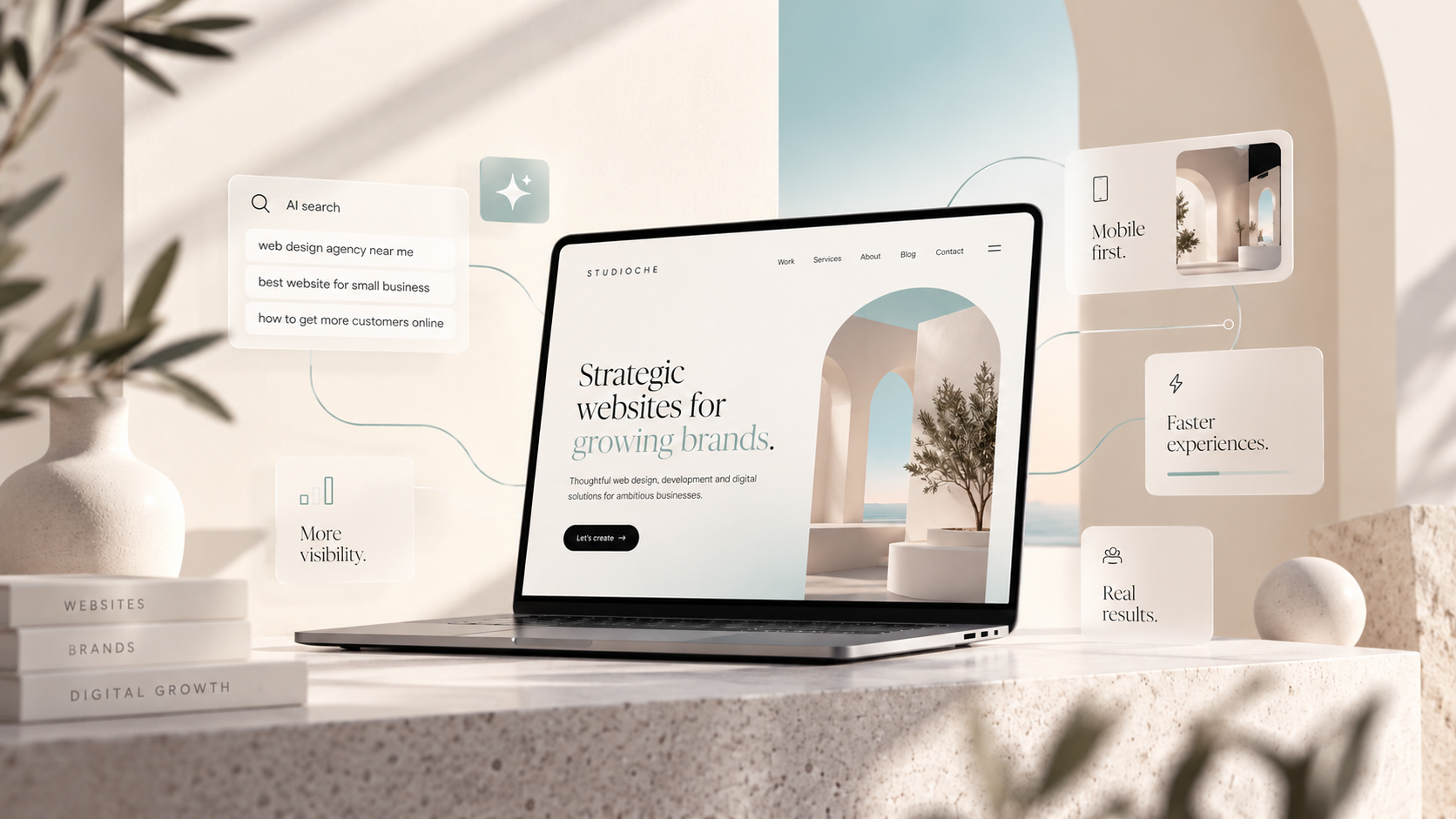
In 2026, customers are using AI-powered search tools, browsing on mobile devices and expecting faster, more personalised digital experiences.
For businesses, this means a website needs to do more than simply look good. It should help people discover your services, find answers, build trust and take action.
The good news? You don’t need to understand complicated technology to keep up with the latest web development trends.
You just need to understand what makes a website work for your customers.
What Are the Biggest Website Trends in 2026?
The most important website trends in 2026 include AI-powered search, mobile-first design, faster website performance, user-friendly experiences and content that answers customer questions clearly.
These trends are changing how businesses approach website development, search engine optimisation (SEO) and their overall digital presence.
Let’s explore what they mean for your business.
1. AI Search Is Changing How Customers Find Businesses
Think about the last time you searched for a product or service.
You might have used Google, checked social media or asked an AI assistant such as ChatGPT for recommendations.
Your customers are doing the same.
Instead of searching for “website designer South Africa”, someone might ask:
“Which web design agency in South Africa can help a small business build a modern, affordable website?”
This shift towards conversational searches means businesses need websites that provide clear, relevant and helpful information.
What is the difference between SEO and AEO?
Search Engine Optimisation (SEO) helps improve your website’s visibility in traditional search engine results.
Answer Engine Optimisation (AEO) focuses on structuring content so that AI-powered search experiences can understand and potentially use it when answering questions.
Both approaches benefit from high-quality content, clear website structure and accurate business information.
For example, a website that clearly explains its services, pricing approach, location and frequently asked questions makes it easier for customers and search systems to understand what the business offers.
What this means for your business: Your website should answer the questions your potential customers are already asking, using natural language rather than complicated industry terminology.
2. Modern Website Design Is About More Than Appearance
We’ve all visited a beautiful website that was surprisingly difficult to use.
The animations looked impressive, the photography was stunning, but finding the contact page felt like solving a puzzle.
In 2026, effective website design is increasingly focused on balancing visual appeal with functionality.
Customers want to understand what a business offers without having to search through multiple pages.
What makes a good business website?
A good business website should:
- Clearly explain your products or services.
- Work smoothly on mobile phones, tablets and desktops.
- Load quickly and respond to user interactions.
- Make navigation simple and intuitive.
- Include visible calls to action, such as “Get a Quote” or “Contact Us“.
- Build trust through testimonials, case studies and useful information.
Your website doesn’t need every new design trend to be effective.
Sometimes, the simplest experiences are the most memorable.
3. Mobile-First Website Design Is Essential
Imagine discovering a business on Instagram, clicking through to its website and finding tiny text, oversized images and buttons that are difficult to tap.
Chances are, you wouldn’t stay long.
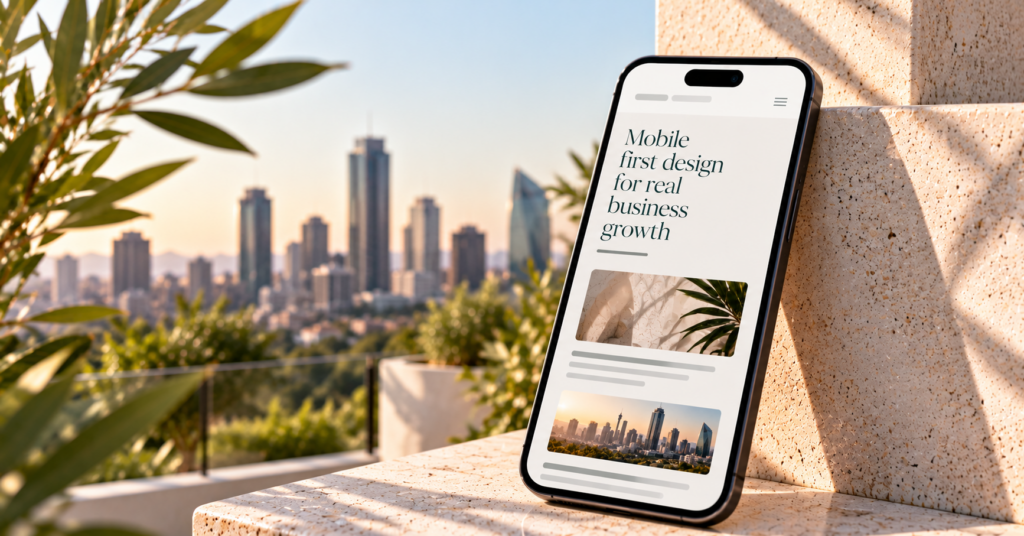
Mobile-first design means considering the mobile browsing experience from the beginning of the website development process, rather than treating it as an afterthought.
This is particularly relevant for South African businesses, where customers often browse using smartphones and mobile data.
Why is responsive web design important?
Responsive web design allows a website’s layout and content to adapt to different screen sizes.
A responsive website improves usability by ensuring that text remains readable, navigation is accessible and buttons are easy to use across devices.
It also supports a better overall experience for visitors arriving through Google, social media or direct links.
A simple test: Open your business website on your phone. Can you find your services, understand what you offer and contact your business without difficulty?
If not, your website might be creating unnecessary obstacles for potential customers.
4. Website Speed Can Influence Customer Decisions
Nobody enjoys waiting for a website to load.
Whether someone is browsing an online store, booking an appointment or requesting a quotation, a slow website can make the experience frustrating.
Website performance is also an important consideration for search visibility and usability.
Google uses Core Web Vitals to measure aspects of the user experience, including loading performance, responsiveness and visual stability.
How can businesses improve website speed?
Some common website speed improvements include:
- Optimising large images before uploading them.
- Choosing reliable website hosting.
- Removing unnecessary plugins and scripts.
- Using efficient website layouts and code.
- Enabling suitable caching and performance optimisation.
A faster website doesn’t automatically guarantee more enquiries or sales, but it can make it easier for customers to browse and interact with your business.
5. AI Website Builders Are Growing, But Strategy Still Matters
Artificial intelligence is making website creation more accessible.
AI-powered website builders can suggest layouts, generate written content, create images and assist with development tasks.
For small businesses, these tools can be useful for creating a basic online presence.
But building a website and building an effective digital experience are not always the same thing.
Can AI replace professional website developers?
AI can automate parts of website development, but it doesn’t automatically understand your customers, business goals, competitive environment or brand identity.
A professional website development process considers how your website should support your business, from content structure and user experience to SEO, security and long-term maintenance.
AI is best viewed as a tool that can support the creative and technical process, rather than a guaranteed replacement for strategic thinking.
The most effective websites combine useful technology with a clear understanding of the people they’re designed for.
6. Your Website Should Work as a Business Tool
One of the most important changes in website development is how businesses think about their websites.
A website shouldn’t simply be a digital brochure that remains untouched for years.
It should actively support your business goals.
For some businesses, that means generating enquiries. For others, it might mean selling products, encouraging bookings, showcasing projects or providing useful customer information.
How can a website help a business grow?
An effective business website can support growth by improving online visibility, establishing credibility and making it easier for potential customers to take the next step.
This could include:
- Clear service pages targeting relevant customer needs.
- Helpful blog articles answering common questions.
- Contact forms that are easy to complete.
- Testimonials and project examples that demonstrate experience.
- Search-friendly content that helps customers discover your business.
- Clear pathways towards enquiries, bookings or purchases.
The key is making sure your website has a purpose beyond simply existing online.
Does Your Business Need a Website Redesign in 2026?
Not every business needs a completely new website.
Sometimes, updating your content, improving mobile responsiveness or optimising your website for search engines can make a meaningful difference.
However, if your website is difficult to navigate, outdated, slow or no longer reflects your business, a redesign may be worth considering.
Before making that decision, ask yourself:
Can customers find my business online? Your website should be discoverable through relevant search queries and provide clear information about your services.
Is my website easy to use? Visitors should be able to navigate your website comfortably across devices.
Does my website encourage customers to take action? Whether your goal is enquiries, bookings or sales, your website should make the next step obvious.
Does my website reflect my business today? Your online presence should accurately represent your current services, expertise and brand identity.
If the answer to several of these questions is no, it might be time to reconsider your website strategy.
Frequently Asked Questions About Website Development in 2026
1. What are the biggest web design trends in 2026?
The biggest web design trends in 2026 include AI-powered search optimisation, mobile-first design, faster loading speeds, accessible layouts, simplified navigation and user-focused content. Businesses are increasingly prioritising websites that combine attractive design with practical functionality.
2. Is SEO still important in 2026?
Yes. SEO remains important because search engines continue to help customers discover businesses online. Effective SEO involves creating helpful content, maintaining a technically sound website and making it easy for search engines to understand your pages. These fundamentals also support visibility in AI-powered search experiences.
3. What is AEO and why does my website need it?
Answer Engine Optimisation (AEO) is the practice of making website content clear, structured and useful for answer-based search experiences. It can include direct answers to customer questions, descriptive headings, accurate information and appropriate structured data. AEO can improve how easily your content is understood, although it does not guarantee inclusion in AI-generated answers.
4. How often should a business update its website?
A business should review its website regularly to ensure that its content, services, contact information, security and functionality remain up to date. A complete redesign is not always necessary, but ongoing improvements help keep a website relevant and useful.
5. Can AI build a professional business website?
AI tools can assist with creating website layouts, writing content and generating code. However, a professional business website also requires strategic planning, user experience design, branding, performance optimisation and ongoing maintenance. AI-generated websites should be reviewed and tested before launch.
6. Why is mobile-friendly website design important?
Mobile-friendly design ensures that customers can comfortably access and use a website on smartphones and tablets. It improves readability, navigation and usability, while supporting a consistent experience across devices.
7. How do I know if my business website needs a redesign?
Your website may need a redesign if it loads slowly, performs poorly on mobile, has outdated information, is difficult to navigate or no longer reflects your brand. Reviewing your website’s performance and customer experience can help determine whether improvements or a full redesign are necessary.
8. How can I make my website more visible on Google and AI search platforms?
Start by publishing helpful, original content that clearly explains your services and answers customer questions. Use descriptive page titles, logical headings, relevant internal links and accurate business information. Technical SEO, mobile usability and appropriate structured data can also help search systems understand your website.
The Future of Web Development Is More Human Than You Think
Technology will continue to evolve. New AI tools, design trends and digital platforms will change how businesses connect with customers.
But one thing remains consistent: people want online experiences that are simple, helpful and trustworthy.
The best websites in 2026 aren’t necessarily the ones with the most features or the flashiest designs.
They’re the ones that understand their customers.
Let’s Build a Website That Works for Your Business
At StudioChe, we create thoughtful digital experiences that bring together design, functionality and strategy.
From responsive WordPress website development to SEO, AEO and digital solutions, we help South African businesses build an online presence designed for today’s digital world.
Whether you’re launching something new or refreshing an existing website, we’re here to help you make your next digital move.
Ready to give your website a fresh perspective?
Visit www.studioche.co.za or email hello@studioche.co.za to get started.